



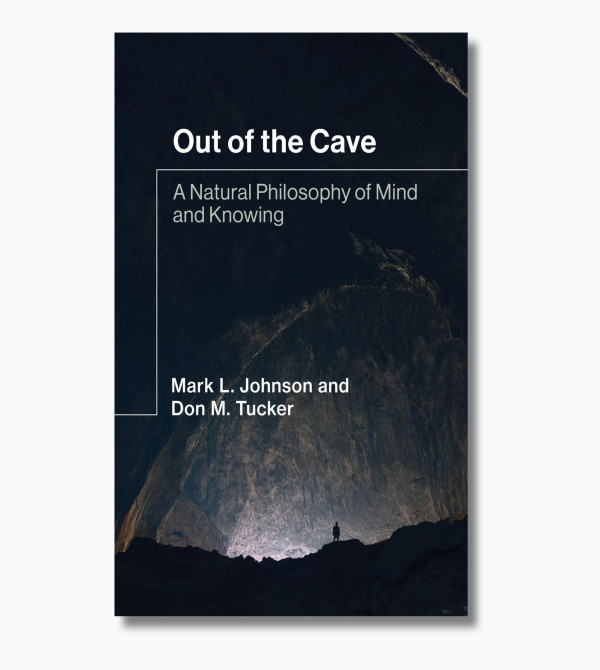

Plato's Allegory of the Cave trapped us in the illusion that mind is separate from body and from the natural and physical world. Knowledge had to be eternal and absolute. Recent scientific advances, however, show that our bodies shape mind, thought, and language in a deep and pervasive way. In Out of the Cave, Mark Johnson and Don Tucker—a philosopher and a neuropsychologist—propose a radical rethinking of certain traditional views about human cognition and behavior. They argu...
Plato's Allegory of the Cave trapped us in the illusion that mind is separate from body and from the natural and physical world. Knowledge had to be eternal and absolute. Recent scientific advances, however, show that our bodies shape mind, thought, and language in a deep and pervasive way. In Out of the Cave, Mark Johnson and Don Tucker—a philosopher and a neuropsychologist—propose a radical rethinking of certain traditional views about human cognition and behavior. They argue for a theory of knowing as embodied, embedded, enactive, and emotionally based. Knowing is an ongoing process—shaped by our deepest biological and cultural values. Johnson and Tucker describe a natural philosophy of mind that is emerging through the convergence of biology, psychology, computer science, and philosophy, and they explain recent research showing that all of our higher-level cognitive activities are rooted in our bodies through processes of perception, motive control of action, and feeling. This developing natural philosophy of mind offers a psychological, philosophical, and neuroscientific account that is at once scientifically valid and subjectively meaningful—allowing us to know both ourselves and the world.
Welcome to Tanto Cyber - Cybersecurity & IT Solutions! 🚀
To access all the features and facilities we provide, please log in first using your account.
By using TantoCyber.com, you agree to comply with the applicable rules for the safety and convenience of everyone.
Thank you for being part of our community! 🔒✨
Tanto Cyber: A platform sharing free eBooks & tech insights, focusing on cybersecurity and knowledge.