
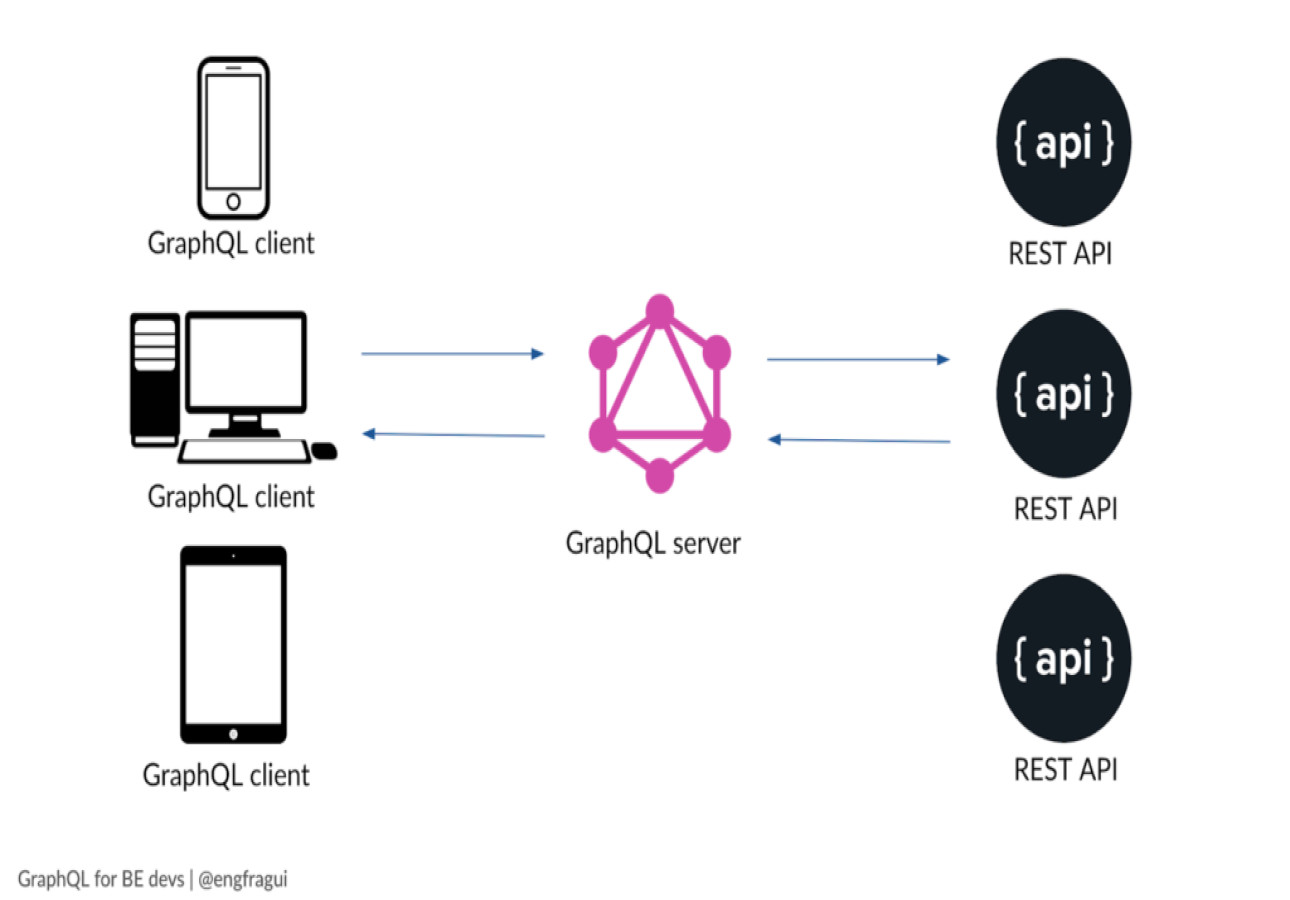
GraphQL is a query language for your API. Developers can describe the structure of the data they need in a single query instead of making multiple requests for specific data endpoints. This cuts down on both over-fetching and under-fetching of data, which improves the performance of the network.
- Understanding GraphQL:
- A Query Language: GraphQL is a query language for your API. Developers can describe the structure of the data they need in a single query instead of sending out multiple requests for specific data endpoints. This stops data from being pulled too much or too little, making the network run more efficiently.
- Flexible Schema: In GraphQL, the schema is self-documenting, so clients can figure out what types and fields are in the API. Clients can ask for just the data they need, making data getting more efficient.
- Single Endpoint: GraphQL usually only has a single endpoint, unlike RESTful APIs that have multiple endpoints for different services. This makes it easier to handle APIs and lessens the need to keep track of versions.
- GraphQL's benefits:
- Efficiency: GraphQL lets clients get only the data they need, so less data is sent over the network than is necessary. This can make it faster for apps to load.
- Flexibility: Clients have fine-grained control over what data they receive. They can choose the shape and structure of the answer, which makes it easier to adapt to changing application needs.
- Reduced Over-Fetching: When clients use RESTful APIs, they often get more data than they need. This is called "over-fetching." GraphQL gets rid of this problem, which makes it easier to use data.
- Batching: GraphQL lets you send multiple questions in a single request, so you don't have to go back and forth to the server as often. This is especially helpful for mobile apps that have a limited amount of data.
- Real-time data: GraphQL can be used with subscriptions to allow real-time updates and push alerts. This is useful for programs that need live info, like chat programs or tools for working together.
- GraphQL use cases:
- Complex Interfaces: GraphQL is great for apps with complicated user interfaces because it lets clients ask for all the data they need in a single query. This reduces the number of API requests.
- Mobile apps: Mobile apps usually have limited bandwidth, so GraphQL's ability to request only the data that is needed can improve speed and reduce data usage.
- APIs for Public Use: GraphQL is perfect for APIs that third-party developers can use, since it lets users get only the data they need. This keeps the server from getting too busy.
- Think about:
- Learning Curve: GraphQL is different from RESTful APIs in how queries are built and run, so it may take some time to learn.
- Backend Implementation: Setting up a GraphQL server takes more work than setting up a traditional RESTful API because you have to define a structure and resolvers for getting data.
- Caching: Because GraphQL queries are dynamic, it can be harder to store answers in a cache. Developers need to use caching techniques that work well.

In conclusion, GraphQL is a compelling alternative to RESTful APIs for building data-driven apps. It is a good choice for applications with complex user interfaces, mobile apps, or public APIs because it is fast, flexible, and can prevent over-fetching. By using GraphQL, developers can make apps that are more efficient and flexible, able to meet the changing needs of users and clients while improving data transfer and reducing server load.












Comments